Korean Bibimbap
Highlighted under: Cultural Inspiration
Korean Bibimbap is a vibrant and flavorful dish that combines rice, vegetables, and protein topped with a fried egg and spicy gochujang sauce.
Korean Bibimbap is not just a meal; it's a delightful experience that brings together various textures and flavors. Each ingredient plays a role in creating a well-balanced and nutritious dish that's sure to satisfy your cravings.
Why You Will Love This Recipe
- Colorful and visually appealing with a variety of fresh vegetables
- Customizable to suit your taste preferences or dietary needs
- A perfect balance of flavors and textures with spicy, savory, and crunchy elements
Understanding Bibimbap
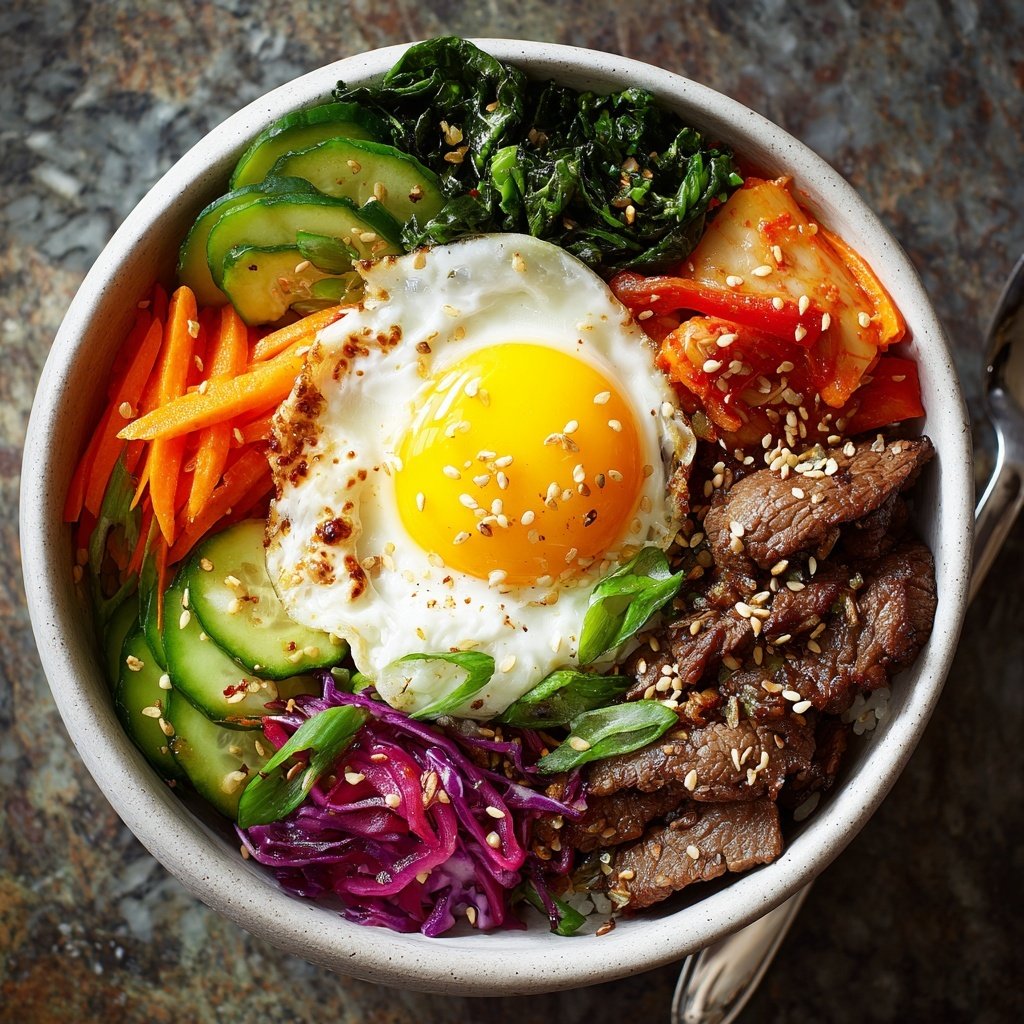
Bibimbap is a traditional Korean dish that translates to 'mixed rice.' The name aptly describes the way this dish is prepared and enjoyed. Each component, from the sautéed vegetables to the protein, is beautifully arranged over a bed of rice, creating a stunning visual appeal. The artistry of bibimbap not only lies in its appearance but also in the harmony of flavors and textures that come together in each bite.
This dish is a celebration of seasonal vegetables, which are often picked fresh from local markets. Each vegetable adds its unique flavor and nutritional benefits, making bibimbap a healthy choice. Moreover, the combination of ingredients can vary significantly based on regional preferences or personal tastes, allowing for a versatile dining experience.
The Importance of Gochujang
Gochujang is a staple in Korean cuisine, known for its distinctive flavor profile that combines sweetness, spiciness, and umami. This fermented chili paste is made from red chili powder, glutinous rice, powdered fermented soybeans, and salt. Its depth of flavor enhances many dishes, but it is perhaps most beloved for its role in bibimbap, where it adds a spicy kick that elevates the meal.
When adding gochujang to your bibimbap, you can adjust the amount based on your heat tolerance. A little goes a long way, so start with a small dollop and mix thoroughly before tasting. You can also explore different brands of gochujang, as they can vary in spice levels and sweetness, allowing you to customize your dish to perfection.
Customization and Variations
One of the best aspects of bibimbap is its customization potential. While the traditional recipe calls for specific vegetables and proteins, feel free to substitute or add ingredients that suit your preferences. For example, you can include avocado for creaminess, tofu for a vegetarian option, or even kimchi for an extra punch of flavor. The flexibility of bibimbap makes it a fantastic option for accommodating various dietary needs.
Additionally, you can experiment with different grains as a base. While white rice is typical, brown rice, quinoa, or even cauliflower rice can be used for a healthier alternative. This adaptability not only keeps the dish exciting but also allows you to enjoy bibimbap in a way that aligns with your lifestyle.
Ingredients
For the Bibimbap
- 2 cups cooked white rice
- 1 cup spinach, blanched
- 1 cup bean sprouts, blanched
- 1 cup carrots, julienned and sautéed
- 1 cup zucchini, julienned and sautéed
- 4 eggs
- 1/2 cup shiitake mushrooms, sautéed
- Gochujang sauce, to taste
- Sesame oil, for drizzling
- Sesame seeds, for garnish
Make sure to prepare all ingredients before assembling your bibimbap for a quick and easy meal.
Instructions
Prepare the Ingredients
Cook the rice according to package instructions. Prepare vegetables by blanching or sautéing them until tender. Set aside.
Cook the Eggs
In a non-stick skillet, fry the eggs sunny-side up until the whites are set but the yolks are still runny.
Assemble the Bibimbap
In a large bowl, add a portion of rice. Arrange the blanched spinach, bean sprouts, sautéed carrots, zucchini, and shiitake mushrooms on top. Place the fried egg in the center.
Add Sauce and Serve
Drizzle gochujang sauce and sesame oil over the top. Sprinkle with sesame seeds. Mix everything together before eating.
Enjoy your homemade Korean Bibimbap!
Pro Tips
- Feel free to customize your bibimbap with your favorite vegetables or proteins like chicken, beef, or tofu.
Serving Suggestions
Bibimbap is often served with a side of Korean pickled vegetables, known as 'banchan,' which can enhance the meal with additional flavors and textures. Serving a light soup or broth alongside bibimbap can also create a comforting dining experience. For a complete meal, consider pairing it with a refreshing Korean drink, like iced barley tea or a sweetened rice drink.
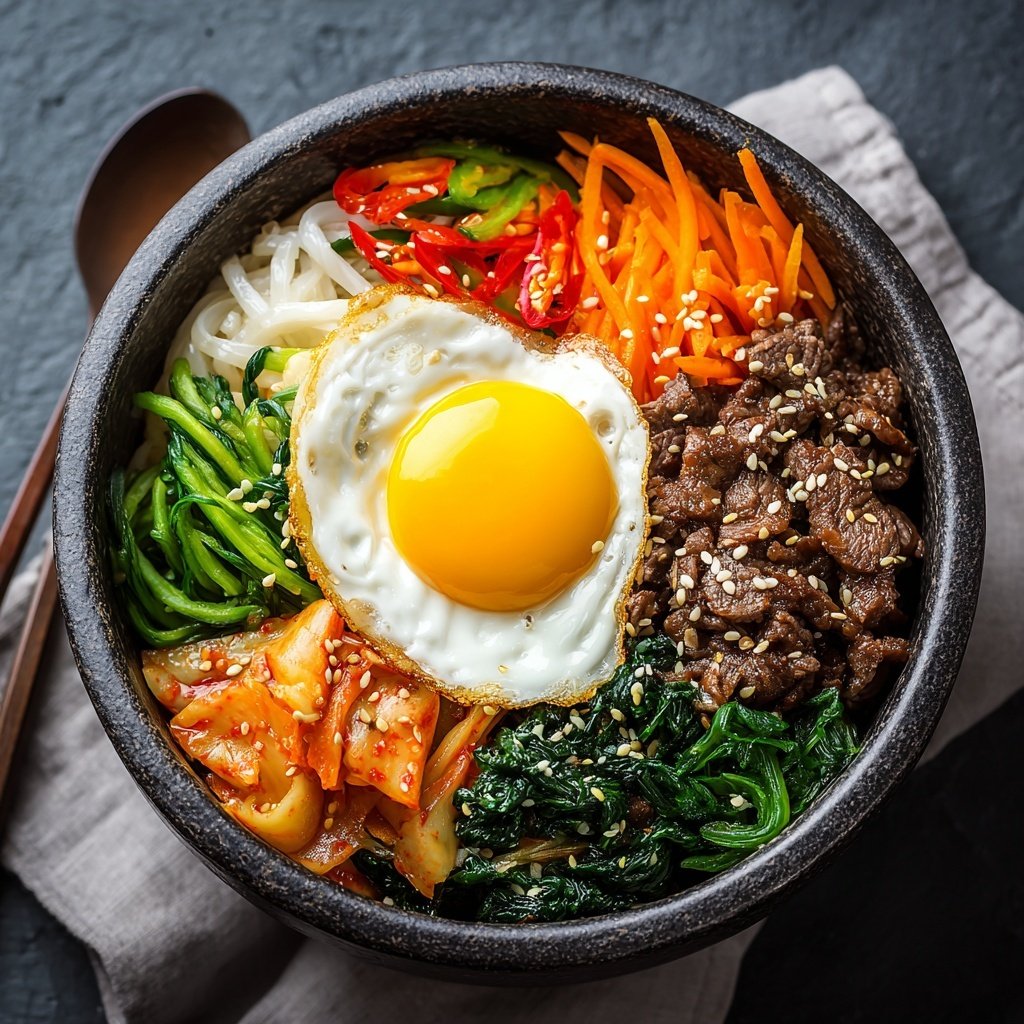
Another delightful way to enjoy bibimbap is to serve it in a hot stone bowl, known as 'dolsot.' This method not only keeps the ingredients warm but also creates a crispy layer of rice at the bottom, adding a satisfying crunch to each bite. The sizzling sound and aroma of the hot stone bowl make the dining experience even more enjoyable.
Nutritional Benefits
Korean bibimbap is not only delicious but also packed with nutritional benefits. The dish is rich in vitamins and minerals from the variety of vegetables included. Spinach, for instance, provides iron and calcium, while carrots are a great source of beta-carotene. The incorporation of mushrooms adds antioxidants, making bibimbap a wholesome choice for those seeking a nutrient-dense meal.
Additionally, the use of healthy fats from sesame oil and the protein from the eggs or other protein sources contributes to a balanced meal. This makes bibimbap a great option for those looking to maintain energy levels throughout the day while enjoying a flavorful dish.
Questions About Recipes
→ Can I use brown rice instead of white rice?
Yes, brown rice can be used for a healthier option, but the cooking time may vary.
→ Is bibimbap served hot or cold?
Bibimbap is typically served warm, but the vegetables can be enjoyed at room temperature.
→ Can I make bibimbap vegan?
Absolutely! Simply omit the egg and use tofu or additional vegetables.
→ What can I substitute for gochujang?
You can use sriracha or another chili paste, but the flavor will differ slightly.
Korean Bibimbap
Created by: Jacqueline Moore
Recipe Type: Cultural Inspiration
Skill Level: Intermediate
Final Quantity: 4 servings
What You'll Need
For the Bibimbap
- 2 cups cooked white rice
- 1 cup spinach, blanched
- 1 cup bean sprouts, blanched
- 1 cup carrots, julienned and sautéed
- 1 cup zucchini, julienned and sautéed
- 4 eggs
- 1/2 cup shiitake mushrooms, sautéed
- Gochujang sauce, to taste
- Sesame oil, for drizzling
- Sesame seeds, for garnish
How-To Steps
Cook the rice according to package instructions. Prepare vegetables by blanching or sautéing them until tender. Set aside.
In a non-stick skillet, fry the eggs sunny-side up until the whites are set but the yolks are still runny.
In a large bowl, add a portion of rice. Arrange the blanched spinach, bean sprouts, sautéed carrots, zucchini, and shiitake mushrooms on top. Place the fried egg in the center.
Drizzle gochujang sauce and sesame oil over the top. Sprinkle with sesame seeds. Mix everything together before eating.
Extra Tips
- Feel free to customize your bibimbap with your favorite vegetables or proteins like chicken, beef, or tofu.
Nutritional Breakdown (Per Serving)
- Calories: 500 kcal
- Total Fat: 20g
- Saturated Fat: 5g
- Cholesterol: 185mg
- Sodium: 300mg
- Total Carbohydrates: 65g
- Dietary Fiber: 5g
- Sugars: 5g
- Protein: 15g